Treat Ankle Arthritis and Ankle Tendonitis Pain
with Regenerative Medicine
Why does your ankle hurt?
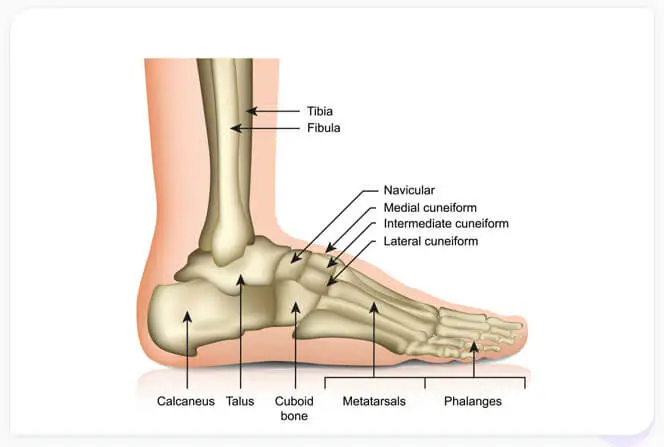
The ankle joint connects your leg bones to your foot. It is required in order to move your foot up, down, inwards, and outwards (See Figure 1).
The bones in the joint are covered in a slippery cartilage that absorbs shock and reduces friction so that the bones move smoothly. Tendons connect various muscles to the bones and ligaments connect bones to each other.
Together these components allow the ankle to absorb forces several times greater than your body weight. Damage or injury can severely limit mobility and cause significant pain.
Regenerative Medicine can help alleviate ankle joint injuries without using steroids or resorting to surgery.Figure 1: Bones composing the ankle and foot. The ankle joint is composed of the two leg bones, the tibia and fibula, that form the inside and outside of the ankle, respectively. They meet the foot at the talus, a small bone just above the heel or calcaneus.
What are symptoms of foot pain?
Symptoms of foot pain vary in location (top, side, or bottom of the foot) and according to the cause. Symptoms of foot osteoarthritis include:
- Crepitus: crunching, popping, or grating noises coming from the joints in the feet
- Pain: dull aching pain especially after activity or wearing uncomfortable shoes
- Joint stiffness
- Joint swelling
- Decreased mobility
- Pain in the first joint that connects the big toe to the foot or in the midfoot
Symptoms of foot tendonitis include:
- Pain from bone spurs that accompany tendonitis, may lead to ankle impingement
- Pain following the length of the tendon
- Pain at the attachment point of the tendon to the bone
- Tendon stiffness or sore ankle when waking up in the morning or after inactivity
- Back of ankle pain (Achilles tendonitis, peroneal tendonitis), inner ankle pain (tibial tendonitis), pain stretching toes (flexor tendonitis), pain across top of foot (extensor tendonitis)

What are symptoms of ankle pain?
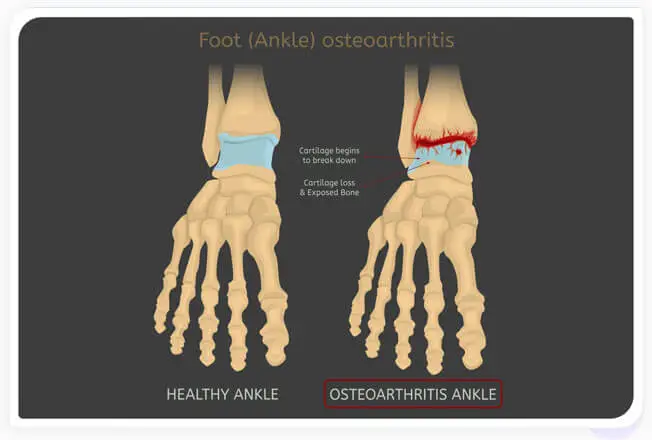
Symptoms of ankle pain vary according to the location of the injury (top, side, or bottom of the foot) and the cause.Symptoms of ankle osteoarthritis include:
- Crepitus: crunching, popping, or grating noises coming from the ankle joint
- Dull aching pain that may be worse in the morning or after inactivity
- Joint stiffness
- Ankle swelling and pain
- Decreased mobility: decreased range of motion limits flexibility
Symptoms of ankle tendonitis include:
- Pain from bone spurs that accompany tendonitis, may lead to ankle impingement
- Pain following the length of the tendon
- Pain at the attachment point of the tendon to the bone
- Tendon stiffness or sore ankle when waking up in the morning or after inactivity
- Back of ankle pain (Achilles tendonitis, peroneal tendonitis), inner ankle pain (tibial tendonitis), pain stretching toes (flexor tendonitis), pain across top of foot (extensor tendonitis)


Risk factors for ankle osteoarthritis and ankle pain:
Metabolic diseases. Changes in the mineral content and health of the tissues and bones in the foot that can lead to increased risk for OA.
Age. Changes in the cells and extracellular matrix of joint tissues that occur in aging increase the susceptibility of older adults to OA, in addition to more wear and tear over time.
Sex. Women are more likely to develop osteoarthritis, this may be related to age-related nutritional deficiencies and hormonal changes (e.g., menopause).
Obesity. Being overweight places excess burden on the body’s joints and may increase the pace of cartilage degeneration as does a sedentary lifestyle.
Repeated stress on the joint. Repetitive activities can damage tendons and ligaments and lead to more wear and tear in joints. This can involve activities related to one’s profession or sporting activities.
Previous trauma. Trauma to ligaments and tendons in the ankle or to the bones increase the risk for OA.
Genetics. There is a higher risk of developing OA if it runs in the family.
Bone deformities. Abnormal bone structure increases the stress at joint, muscles, tendons, ligaments contributing to OA, tendonitis, and bursitis.
How is ankle pain diagnosed?
Our specialists diagnosis foot pain by using a multipronged approach:
Imaging with X-Rays or MRI: X-rays and magnetic resonance imaging (MRIs) are used to determine if your ankle pain is due to arthritis, fractures, or damage to tendons and ligaments.
Medical History: Our doctors will ask you about the nature of your ankle pain (e.g., when and under what conditions you experience ankle and foot pain). They will ask about prior surgeries, accidents, and trauma to the foot, ankle, and leg.
Physical Exam: The doctor will examine the range of motion of the ankle, look for swelling and muscle/tendon tightness.

Treatment Options
How does StemX How does StemX treat degenerative issues associated with ankle pain?
The StemX clinic offers a range of customized Regenerative Medicine treatment solutions for ankle pain.

Wharton’s Jelly
PRP
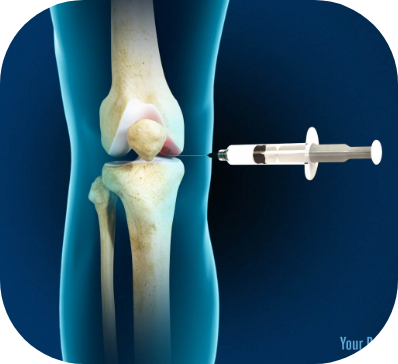
Hyaluronic Acid/
Prolotherapy
The StemX Approach
StemX is California’s leading provider of holistic and regenerative medicine services. Our experts don’t just offer popular treatments, but customized medical solutions based on individual needs.
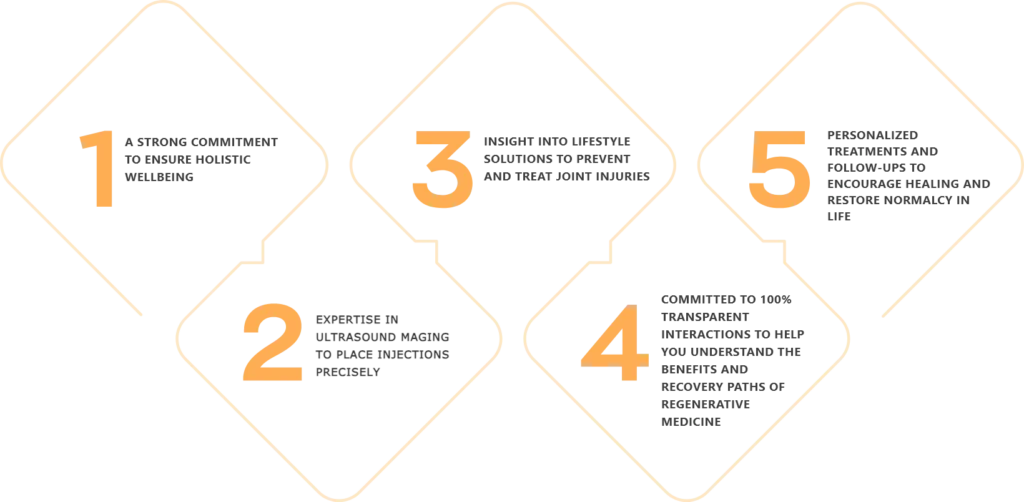
Located in Solana Beach, California, the StemX clinic is composed of a team of expert doctors with years of experience administering regenerative medicine treatments for joint disease. Our team has:
How To Get Started
Consultation:
Our California-based clinic intake team will match you to the appropriate provider with the expertise to treat your injury and schedule an exam.
Initial Exam:
Your doctor will take your medical history and facts surrounding your injury/complaint, conduct a physical exam, and order imaging tests (X-rays, MRI’s, etc.).
Treatment determination:
Use this space to add a short description. It gives enough info to earn a click.
Mark your calendar:
A date will be set for your procedure, and you will be given instructions on how to prepare for your appointment.
Treatment Procedure
While each treatment may be customized, you can expect your experience to be similar to the following: