
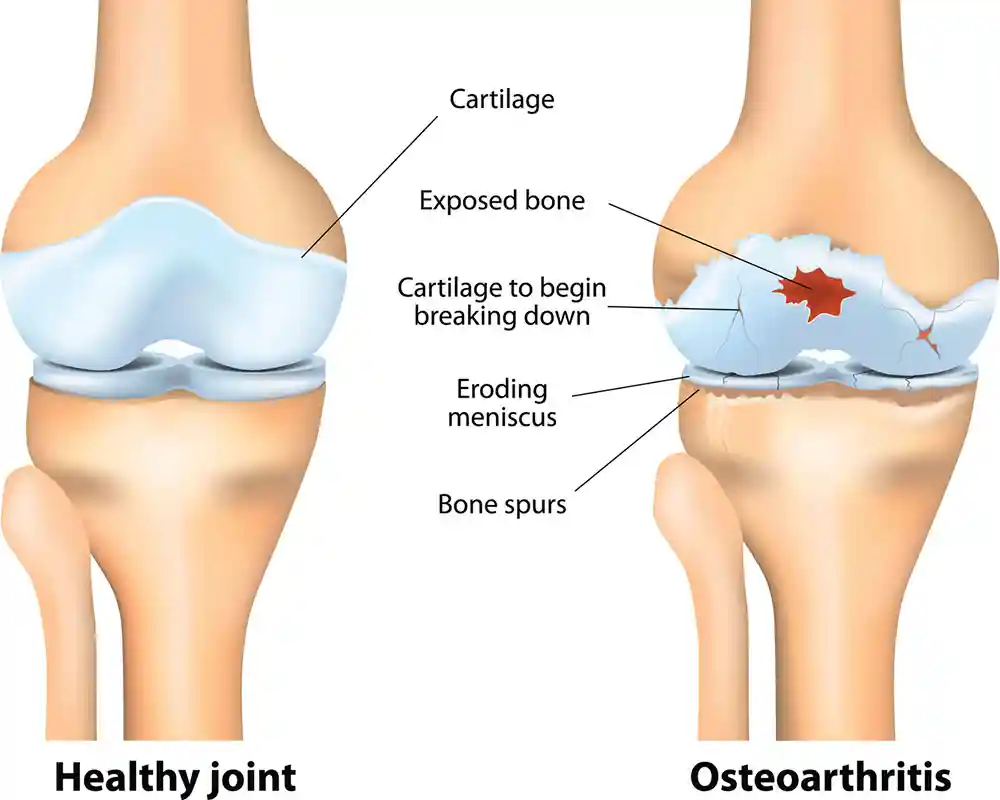
Musculoskeletal joint conditions are extremely prevalent in the US. Osteoarthritis (OA) is the most common of the dozens of forms of arthritis. The Center for Disease Control and Prevention predicted that by 2020, arthritis will gain more patients than any other disease form in America.
Osteoarthritis can affect any joint but most often occurs in the fingers, wrists, knees, hips, lower back, and neck. Typical symptoms include joint pain, swelling, redness, stiffness, instability, immobility, or crepitus (noises from the joint). Because OA is a degenerative disease related to “wear and tear,” symptoms gradually worsen over time.
Pathophysiology of Knee Degeneration
The knee must absorb significant mechanical forces. Two types of cartilage are vital for this:
-
Menisci: Fibrous pads that distribute axial load, absorb shock, and increase stability.
-
Articular Cartilage: A smooth, lubricated surface that reduces friction between abutting bones.
OA develops as these layers wear down. Over time, the menisci wear thin, reducing joint space and increasing friction on the articular cartilage. This leads to pain, decreased mobility, and often the growth of osteophytes (bone spurs).
The Kellgren and Lawrence (KL) Grading System
Orthopedic doctors use the KL system to classify the severity of OA into five grades (0–4):
-
Grade 0 (None): Definite absence of X-ray changes.
-
Grade 1 (Doubtful): Doubtful joint space narrowing and possible bone spurring.
-
Grade 2 (Minimal): Definite bone spurs; osteoarthritis is officially deemed present.
-
Grade 3 (Moderate): Multiple moderate bone spurs, definite joint space narrowing, and some bone deformity. Pain usually begins to alter the quality of life here.
-
Grade 4 (Severe): Large bone spurs, marked narrowing of joint space (often “bone-on-bone”), and severe bone deformity.
Treatment Considerations
-
Grades 0–2: Typically managed with lifestyle changes or monitoring, as pain is often minimal.
-
Grade 3: This is the phase where most patients seek intervention. Conventional drug therapies (NSAIDs, corticosteroids) or Advanced Regenerative Medicine (Growth Factors, PRP, Prolotherapy) are recommended.
-
Grade 4: Often results in recommendations for joint replacement surgery. However, regenerative therapies may offer effective alternatives to postpone or avoid surgery for certain candidates.
Conclusion
Osteoarthritis is a progressive journey. Understanding the KL scale helps patients chart their disease and make educated decisions. Regenerative medicine offers a non-pharmaceutical path to promote healing and restore mobility before the disease becomes debilitating.
About StemX Clinic
StemX provides advanced regenerative treatment options for chronic pain and orthopedic conditions. We focus on natural, non-surgical therapy to repair and rebuild joints.
Contact: 858-228-4189
Location: 124 Lomas Santa Fe Dr., #206, Solana Beach, CA 92075