
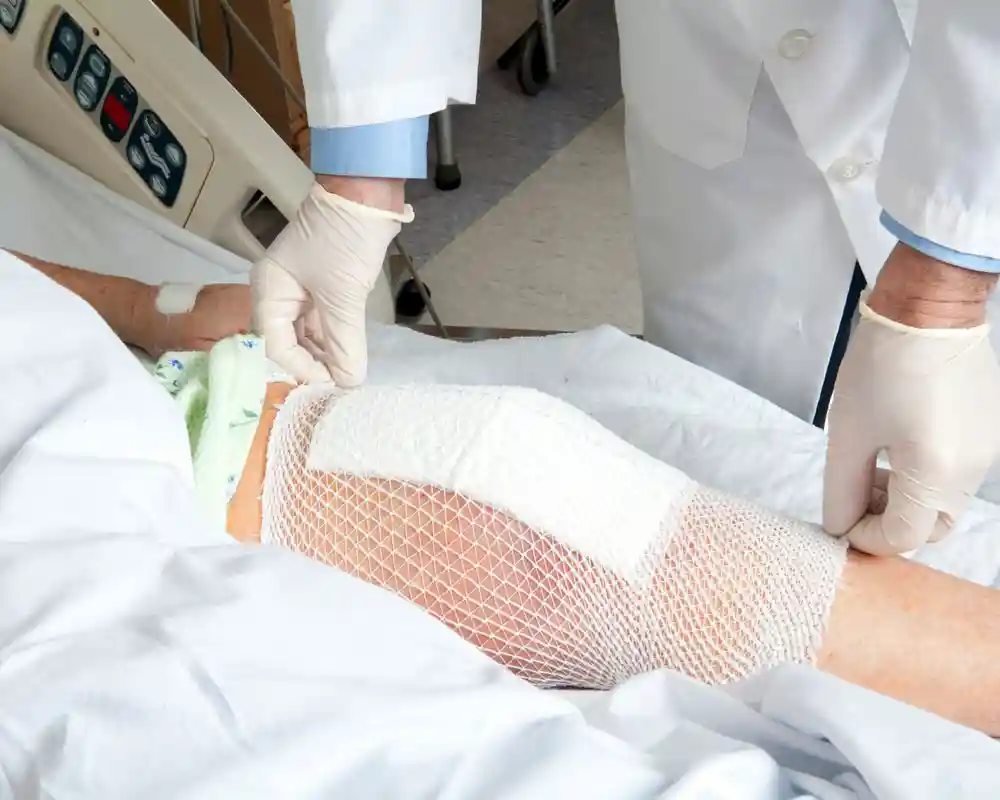
KNEE REPLACEMENT SURGERY (ARTHROPLASTY)
Joint surgery is not an easy decision to make. While the potential patient wants to regain the mobility of their youth and eliminate chronic pain, there are many factors to consider. This applies not only to the surgery itself but to the long recovery process with no guarantee of full mobility or significant pain reduction.
Knee Replacement Surgery is required when you have a worn-out, diseased knee. The process involves removing all the diseased portions and refitting with an artificial joint. The most common problem leading to a knee replacement is osteoarthritis.
The two types of knee surgeries are:
-
Total Knee Replacement: Both sides of the knee are replaced.
-
Partial Knee Replacement: Only one side of the knee is replaced.
Complications Arising From Knee Surgery
-
-
Blood Clots: Blood thinning medication eliminates the clots that may form in the veins in the lower limbs. Clots formed in the lower limbs can cause pulmonary embolism when they travel to the lungs.
-
Osteolysis: The bone next to the knee prosthetic may get brittle and break due to ions released by wear and tear of the knee implant. It is essential to periodically screen for metal (titanium, chromium, cobalt) ions in your bloodstream.
-
Fracture of Implant: There should be a minimum recovery period of at least six weeks. If a patient is in a hurry to be physically active or is overweight, they are at risk of implant fracture.
-
Infection: A serious after-effect. Mild infections are treated with antibiotics. Deep infections require the joint to be removed until it clears. In severe cases, the legs may need to be fused together so the knee no longer bends.
-
Wound Hematoma: Blood may accumulate in the surgical wound. While bleeding is normal for two days post-surgery, excessive swelling under the skin may require surgical discharge.
-
Pain: For about 10%-20% of patients, moderate to severe pain persists indefinitely. This unexplained condition is termed Complex Regional Pain Syndrome.
-
Stiffness: This can often be resolved through exercise and physiotherapy, though internal pain is frequently the factor that stops physical treatment.
-
Alternatives to Knee Replacement Surgery
If the aforementioned risks and the long recovery time leave you with doubts, there are alternatives.
One of those alternatives is knee regenerative medicine. Using advanced amniotic cell therapy, regenerative medicine can repair and rebuild joints and eliminate pain without the risks or recovery time associated with surgery.
Schedule a Consultation Today!
About StemX Group
Located in Solana Beach, CA, the StemX group has been at the forefront of delivering regenerative and alternative medicine to ease pain for patients suffering from acute and chronic orthopedic conditions.
Contact: (858) 228-4189 Location: 124 Lomas Santa Fe Drive Suite 206, Solana Beach, CA 92075