Eliminate Back Pain
Without Steroids or Invasive Surgery
How common is back pain?
Back pain is exceedingly common affecting 8 or 10 people throughout their lifetime. It has been estimated that 65 million Americans report a recent episode of back pain.
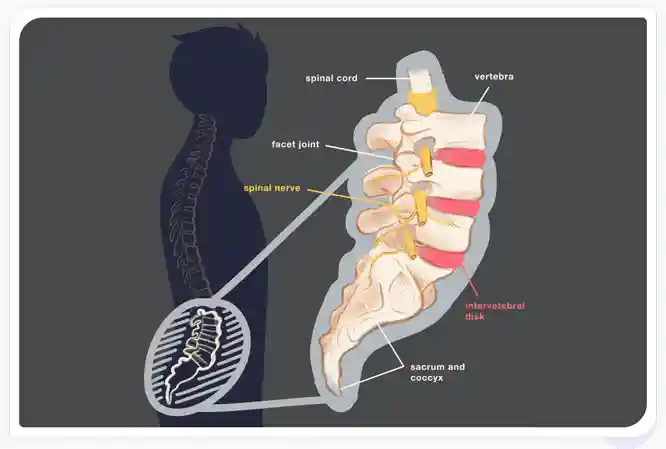
Most back pain results from injury to the muscles, ligaments, joints, or discs in the spine (see Figure 1). The body reacts to injury by initiating an inflammatory response that can cause severe pain.
Back pain can range from very mild to debilitating depending on the cause or severity of the injury.
Figure 1. Illustration of Spine Anatomy. Vertebrae are divided into three sections: Cervical (C1-C7) neck, Thoracic (T1-T12) back, and Lumbar (L1-L5) lower back. The Sacrum and Coccyx compose the end of the spine commonly referred to as the tail bone. Back pain can occur anywhere along the spine.
Causes, Signs And Symptoms
Most often pain is the result of lifting something improperly, or that is too heavy. Abrupt or awkward movements can also lead to an acute injury. Poor posture, standing or sitting for too long, or even sleeping on a mattress with little support can result in back pain.
There are many structural problems that can cause back pain as well:
- Herniated disc
- Degenerative disc disease
- Facet Joint Syndrome
- Sacroiliac joint inflammation
- Spinal stenosis
- Osteoarthritis
- Fractures
- Trauma
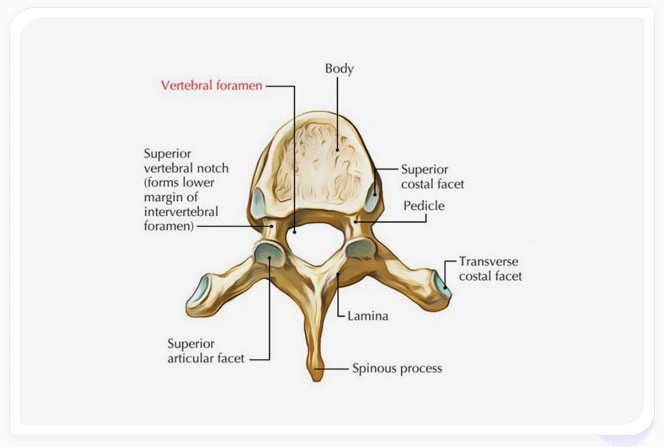
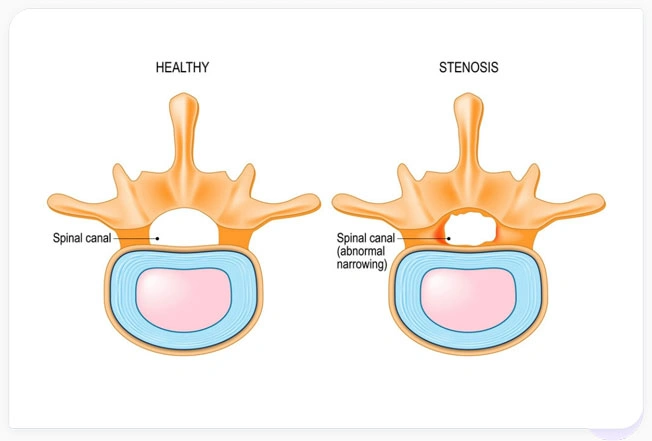
Most structural problems involve the facet joints that allow the spine to bend and twist, discs that cushion the vertebrae, nerves that leave the spine and innervate the limbs and other organs, and the spinal cord (see Figure 2).
Figure 2. Illustration of vertebral column. Fibrous discs separate vertebra in the spine absorbing impacts of movement. Damaged discs place pressure on nerves innervating limbs or the spinal cord causing significant pain. Regenerative Medicine treatments can ease the inflammation and damage to these structures without the side effects of steroids.
Causes, Signs And Symptoms
What are symptoms associated with back pain?
Symptoms of back pain range depending on the location of the injury. The cause of lower back pain may be different than the cause of upper back pain.
- Pain ranging from a dull ache to stabbing or shooting sensation
- Loss of mobility (e.g., inability to stand up straight or bend over)
- Crepitus (e.g., back popping and cracking, getting stuck)
- Bowel/bladder control problems
- Pain or tightness in back that may radiate to the legs (i.e., radicular pain)
- Pain when coughing or urinating

What are the risk factors for developing back pain?
- Age. Those older than 50 years old and athletes are most at risk for arthritic back pain, but anyone can experience LBP at any age due to acute injury and other factors
- Female gender. Evidence suggests that the drop in women’s estrogen levels during menopause may have a negative effect3
- Previous injury to the spine, Spinal Stenosis, Fibromyalgia, Ankylosing Spondylitis, and Osteoarthritis (back arthritis)
- High job demands
- Low physical capacity
- Poor computer workstation design
- Poor posture/poor sleep posture
- Emotional demands/stress
How are specific causes of back pain diagnosed?
Our team of regenerative medicine specialist diagnose Back Pain Disease by using a multipronged approach:
- Medical History: Our doctors will ask you about the nature of your back pain (e.g., when and under what conditions you experience back pain). They will ask about prior surgeries, accidents, and trauma to the neck or back.
- Physical Exam: The doctor will examining the range of motion of the neck/back, look for swelling, listen for any cracking or popping noises (crepitus), and test for muscle weakness.
- Imaging with X-Rays or MRI: X-rays and magnetic resonance imaging (MRIs) are both used to determine if there is damage to discs in the spine and surrounding tissues.
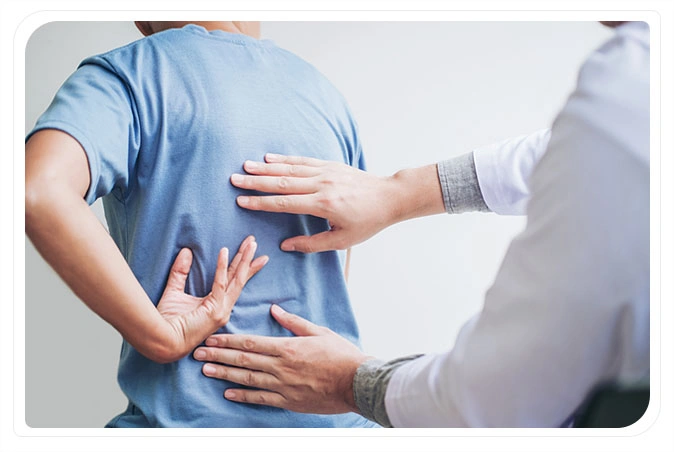
Treatment Options
How is back pain treated?
The StemX clinic offers a range of Regenerative Medicine advanced therapies for back pain.
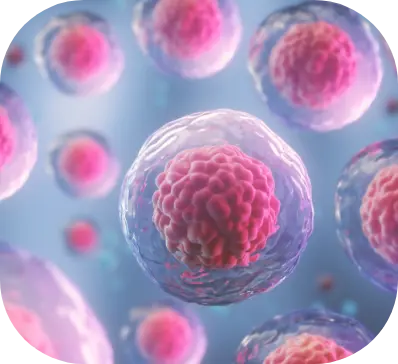
Wharton’s Jelly
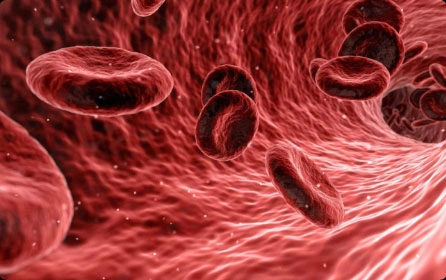
PRP
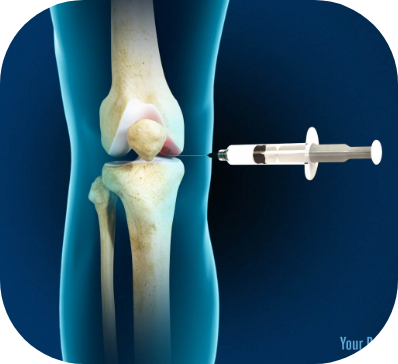
Hyaluronic Acid/
Prolotherapy
The StemX Approach
StemX is California’s leading provider of holistic and regenerative medicine services. Our experts don’t just offer popular treatments, but customized medical solutions based on individual needs.
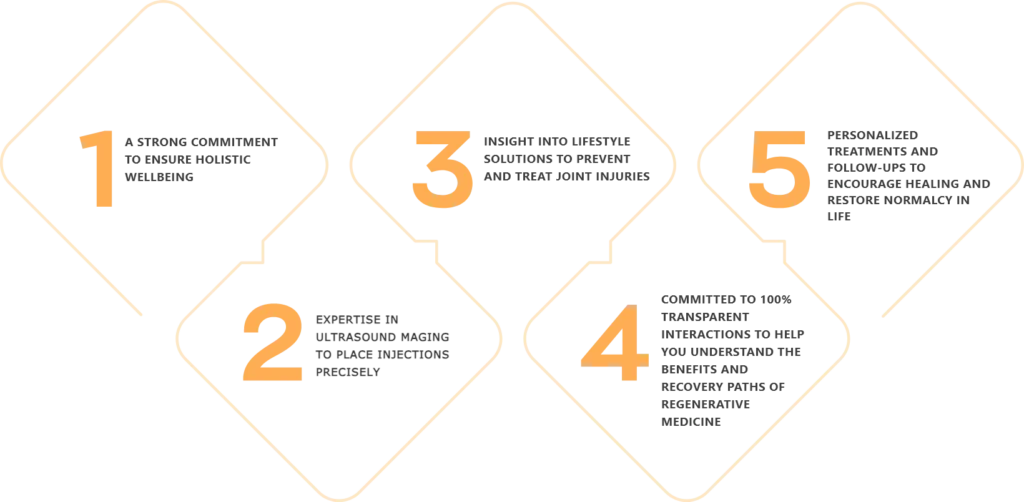
Located in Solana Beach, California, the StemX clinic is composed of a team of expert doctors with years of experience administering regenerative medicine treatments for joint disease. Our team has:
How To Get Started
Consultation:
Our California-based clinic intake team will match you to the appropriate provider with the expertise to treat your injury and schedule an exam.
Initial Exam:
Your doctor will take your medical history and facts surrounding your injury/complaint, conduct a physical exam, and order imaging tests (X-rays, MRI’s, etc.).
Treatment determination:
Use this space to add a short description. It gives enough info to earn a click.
Mark your calendar:
A date will be set for your procedure, and you will be given instructions on how to prepare for your appointment.
Treatment Procedure
While each treatment may be customized, you can expect your experience to be similar to the following: