Treat Hip Pain From Osteoarthritis
Without Steroids Or Surgery
What Is Hip Pain?
Hip pain is any pain localized to the hip joint. The most common cause of hip pain is osteoarthritis (OA) but can also result from muscle and tendon strains and tears.
What Is The Anatomy Of The Hip Joint?
The hip joint or acetabulofemoral joint is a ball-and-socket joint that consists of the head of the femur (thigh bone) and acetabulum of the pelvis (See Figure 1). The acetabulum is a cup-like socket that is deepened by the presence of a fibrocartilaginous collar, the acetabular labrum. The head of femur (the ball) fits completely into socket. Both the acetabulum and head of femur are covered in articular cartilage. Articular cartilage is extremely slippery, decreases friction between the bones, and acts as a shock absorber. The hip is also comprised of muscles, ligaments and tendons, and the synovial membrane and fluid which encapsulates the hip joint and lubricates it. Damage to any of these tissues can cause hip pain and lead to OA.
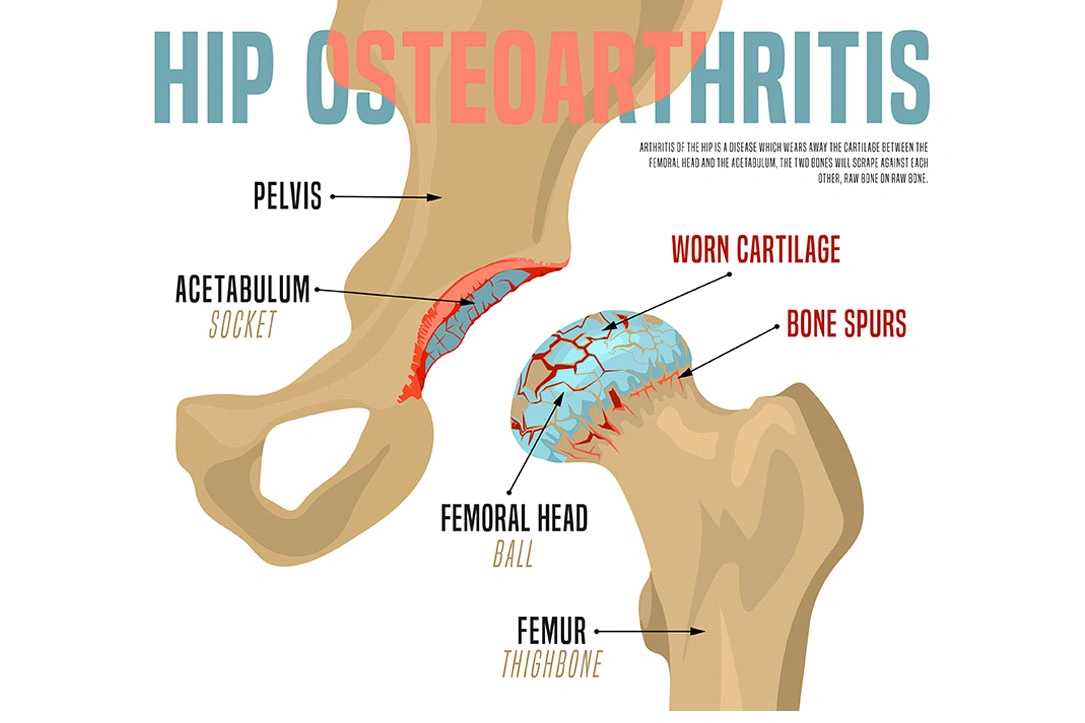
Figure 1. Depiction of the bones of the hip joint. The hip “socket” or acetabulum is part of the pelvis. The “ball”-like head of the thighbone or femur fits into the acetabulum and is held in place with tendons, muscles, and the labrum which forms a ring around the socket (not shown). Covering the head of the femur and acetabulum is articular cartilage that breaks down in OA. Bone spurs also develop with increased joint friction causing pain and stiffness.
What Are The Symptoms Of Hip Degeneration, Hip OA, And Other Injuries?
The location and intensity of hip pain varies depending on the part of the hip that is injured. Fractures, torn cartilage/muscles/tendons, or pinched nerves all produce different pain symptoms.

Common Symptoms Of Hip OA And Other Causes Of Hip Pain Are:
Joint pain. Commonly in groin/thigh, radiating to buttocks or knee, may worsen progressively.
Stiffness. Morning stiffness or stiffness due to inactivity that eases with movement is common.
Inflammation. Redness and warmth may accompany swelling in the hip.
Locking of hip movement. OA may produce a catching sensation where hip movement is not smooth.
Instability. Walking and gait abnormalities may develop. Decreased range of motion.
Decreased range of motion. Over time the ability to fully squat or rotate may diminish.
Crepitus. Crackling, popping, or squeaking sounds may emanate from the joint.
Labral tear. Damage to the labral cartilage
Sprains, tears. Tears to ligaments, muscles, or tendons in the hip can cause pain in different locations in the hip area. Damaged tendons can lead to hip tendonitis.
What are the causes of degenerative hip oa and hip joint pain?
Age and repetitive activities (occupational or sports-related) are the primary causes of hip OA and other injuries to the hip. The following lists several other significant causes/risk factors:
- Sex. Women are more likely to develop osteoarthritis, this may be related to age-related nutritional deficiencies and hormonal changes (e.g., menopause).
- Obesity.Being overweight places excess burden on the body’s joints and may increase the pace of cartilage degeneration as does a sedentary lifestyle.
- Hip impingement.Occurs when the ball of the femur doesn’t fit into the socket of the pelvis correctly damaging the labrum or the articular cartilage. Groin pain is common.
- Rheumatoid arthritis. The body’s immune system can attack the hip joint damaging the articular cartilage lining the acetabulum or head of the femur.
- Bursitis.Swelling and inflammation of the bursa (small fluid filled sacs that reduce friction between the hip bones and surrounding tissues) can cause pain and stiffness.
- Fractures.Trauma from accidents or from falls can partially or completely break bones in the hip making walking impossible in severe cases.
- Dislocation/dysplasia.Trauma or degeneration of the hip socket can cause the ball of the femur to become unseated from the socket.
- Sciatica. The sciatic nerve runs through the hip and when pinched or inflamed can cause lower back and hip pain that often radiates outward

How are hip OA and other hip conditions diagnosed?
Our specialists base their diagnosis of hip OA and other causes of hip pain by using a multipronged approach:
Medical History:Our doctors will ask you about the nature of your hip pain (e.g., when and under what conditions you experience hip pain). They will ask about prior surgeries, accidents, and trauma to the hip.
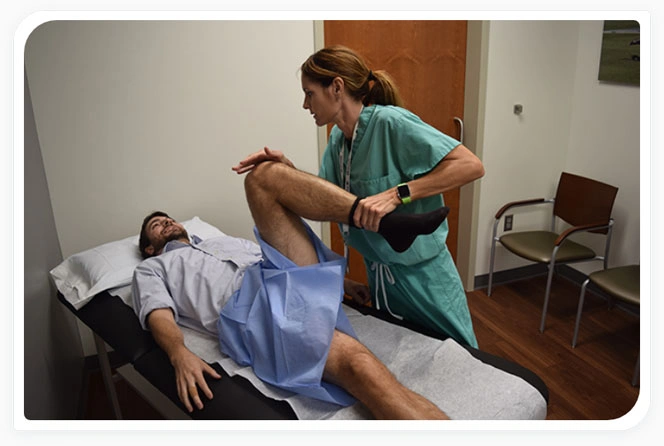
Physical Exam: The doctor will test for hip degeneration by testing the range of motion, determine pain points, look for swelling, listen for any cracking or popping noises (crepitus), and test for muscle weakness.
Imaging with X-Rays or MRI: X-rays can be used to help diagnose a degenerative hip joint or hip OA. Magnetic resonance imaging (MRIs) may be needed to determine if there is damage to surrounding muscles, tendons, or ligaments.
Treatment Options
How is Hip Pain and damage resulting from Hip Osteoarthritis treated?
The StemX clinic offers a range of customized Regenerative Medicine treatments to treat orthopedic injuries.
Wharton’s Jelly
PRP
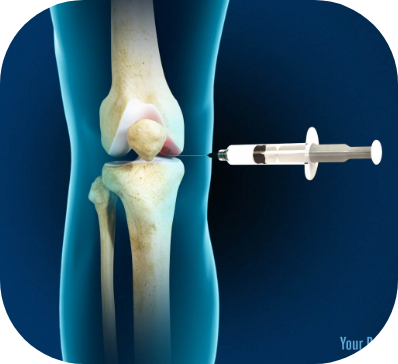
Hyaluronic Acid/
Prolotherapy
The StemX Approach
StemX is California’s leading provider of holistic and regenerative medicine services. Our experts don’t just offer popular treatments, but customized medical solutions based on individual needs.
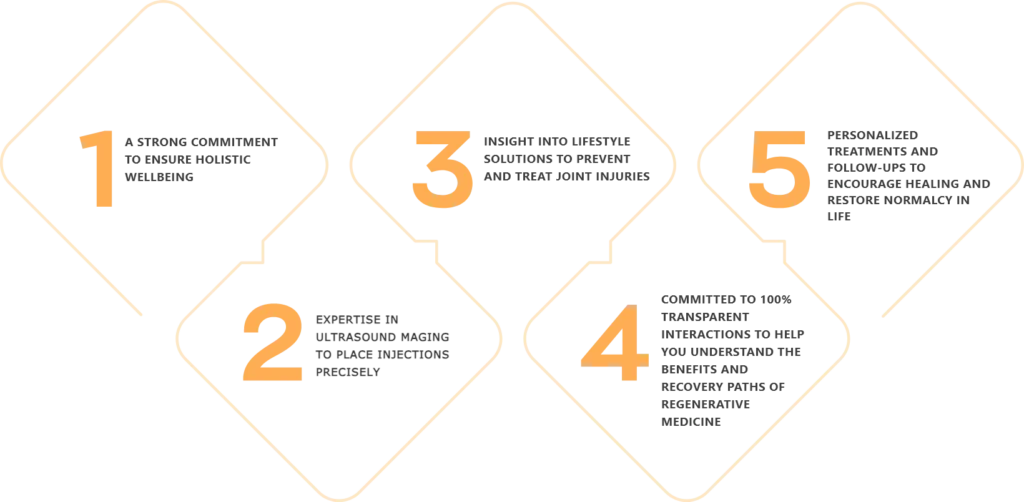
Located in Solana Beach, California, the StemX clinic is composed of a team of expert doctors with years of experience administering regenerative medicine treatments for joint disease. Our team has:
How To Get Started
Consultation:
Our California-based clinic intake team will match you to the appropriate provider with the expertise to treat your injury and schedule an exam.
Initial Exam:
Your doctor will take your medical history and facts surrounding your injury/complaint, conduct a physical exam, and order imaging tests (X-rays, MRI’s, etc.).
Treatment determination:
Use this space to add a short description. It gives enough info to earn a click.
Mark your calendar:
A date will be set for your procedure, and you will be given instructions on how to prepare for your appointment.
Treatment Procedure
While each treatment may be customized, you can expect your experience to be similar to the following: